Key takeaways
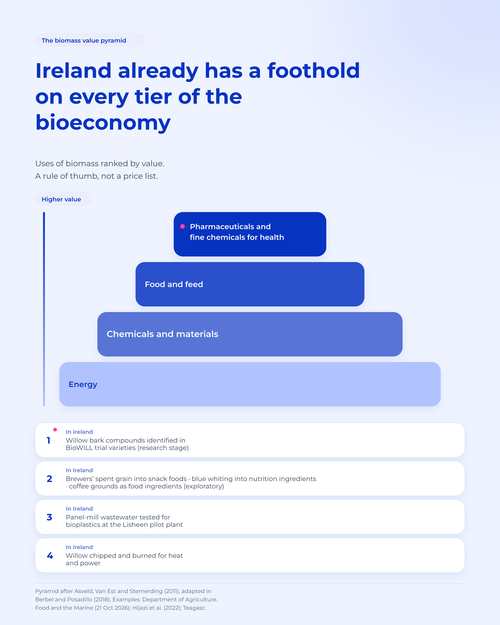
- Bioeconomy researchers rank uses of biomass as a value pyramid, with pharmaceuticals and fine chemicals for health at the top and energy at the bottom. [1]
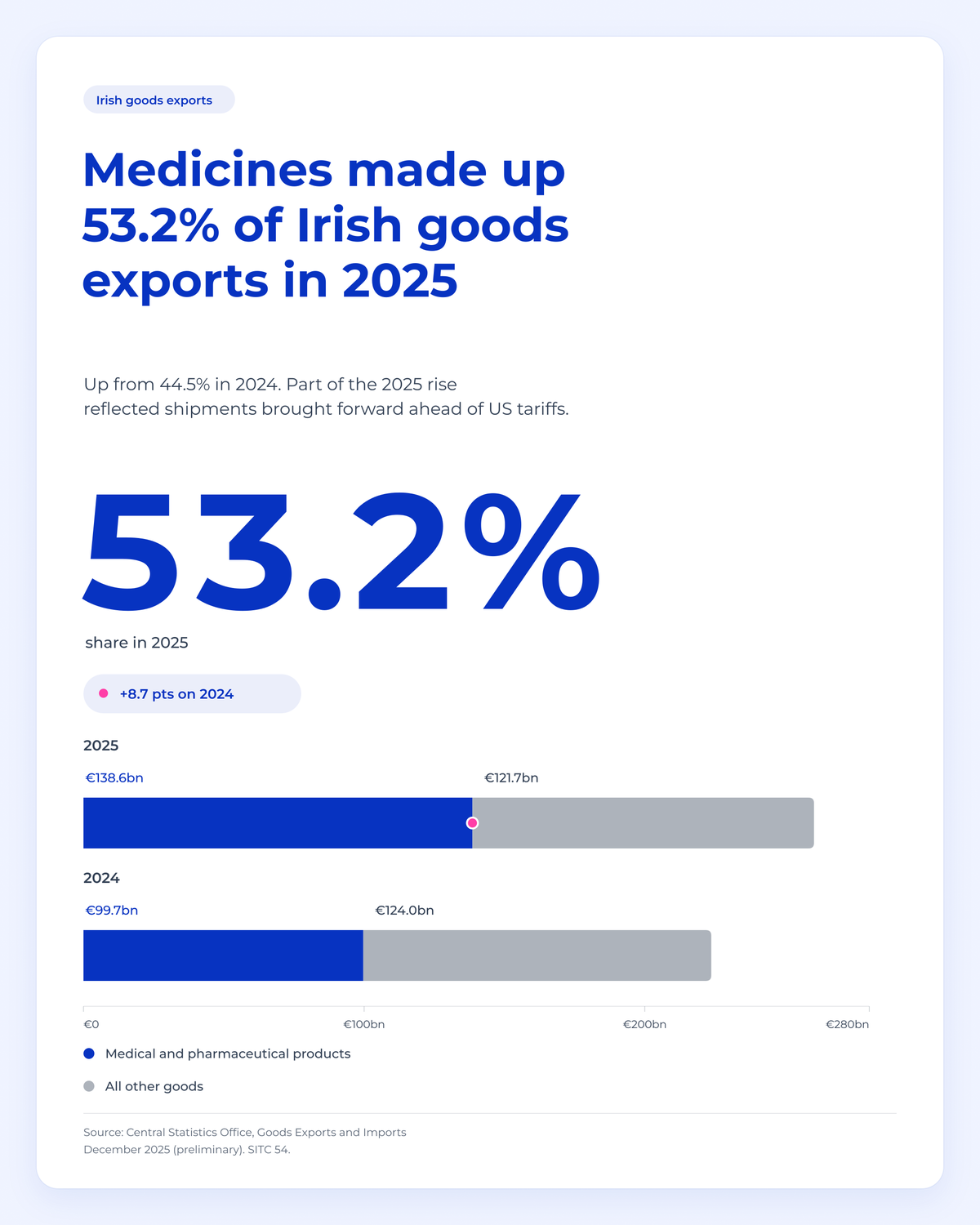
- Ireland exported €138.6 billion of medical and pharmaceutical products in 2025, according to preliminary Central Statistics Office figures. That was 53.2 per cent of goods exports, up from €99.7 billion in 2024. [2]
- BioScale 2030, launched on 21 October 2026, puts its main emphasis on moving research through pilot and demonstration to first commercial deployment. [3]
- A 2022 University of Limerick and AFBI study found salicortin in the bark of seven of eight willow varieties. The European Medicines Agency identifies salicortin as the main characteristic constituent of medicinal willow bark. [4] [5]
Bioeconomy researchers have a simple way of ranking what a crop, a fish or a by-product can become: they draw a pyramid. Fuel sits at the bottom, where biomass is worth least. Chemicals and materials sit above it, then food and feed. At the top, where biomass is worth most, are pharmaceuticals and fine chemicals for health [1]. The pyramid is a rule of thumb rather than a price list, but it is a useful one.
Ireland brings unusual assets to that pyramid. At its base, Irish farms, forests and coastal waters produce biological resources in volume. Near its top, Ireland has a medicines-manufacturing sector of real scale. According to preliminary figures from the Central Statistics Office, it exported €138.6 billion of medical and pharmaceutical products in 2025, which was 53.2 per cent of all goods the country exported [2]. Trade commentators attributed part of the 2025 rise to shipments brought forward ahead of threatened US tariffs [9]. Even so, the 2024 figure was €99.7 billion [2]. The sector's value to the bioeconomy lies less in its raw materials than in its methods: the quality systems and regulatory skills that the top of the pyramid demands.
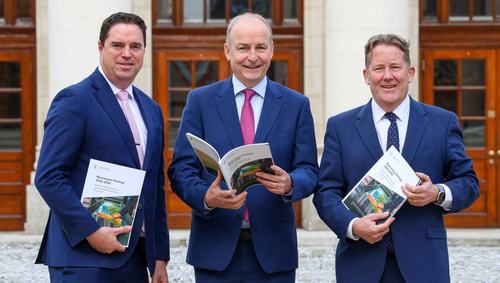
On 21 October, the Government launched BioScale 2030, Ireland's first National Bioeconomy Strategy, at the Global Bioeconomy Summit in Dublin [3]. Its launch statement describes a strategy meant to turn research and renewable biological resources into businesses, markets and regional opportunity. It puts the main emphasis on the pathway from research, through pilot and demonstration, to first commercial deployment [3]. The Minister for Agriculture, Martin Heydon, described the task as connecting Ireland's strengths, scaling what works and building value chains in which primary producers capture more of the value [3].
Put those facts side by side and an opportunity comes into view. The top of the pyramid demands what Ireland's medicines industry does every working day: proving what is in a product, to a published standard, batch after batch. Health-grade ingredients made from Irish biological resources are where two of the strongest parts of the Irish economy can meet.
There is a further reason the top tier suits Ireland. Fuel and bulk materials reward scale, and the countries best placed at the bottom of the pyramid tend to be those with the most land and the cheapest biomass. Health products reward precision instead. A health-grade ingredient needs a fraction of the tonnage that a power station or a bioplastics line consumes, and it earns its return on quality and consistency rather than on volume. For a small country with resources spread across farms, forests and coastal communities, that is a favourable trade.
What does "health-grade" mean in practice?
It means a composition that is measured, consistent and certified against a published standard. Willow bark shows what that involves, and how far Irish research has already come.
Willow has a long history as a medicinal plant. The European Medicines Agency describes its bark as the plant precursor of acetylsalicylic acid [5]. In Ireland it is grown as an energy crop, harvested every few years, chipped and burned for heat and power [6].
I contributed to the BioWILL project's willow research as a co-author with the University of Limerick team, responsible for data curation, and Epitheal was among the project's partners. It left me convinced that the bark Ireland burns for heat is worth measuring before it is burned.
The 2022 study from that work was carried out by chemists at the University of Limerick with the Agri-Food and Biosciences Institute. It analysed bark from eight willow varieties taken from trials in Armagh, Mayo and northern France, and found salicortin in the bark of seven of them [4]. That matters because of what salicortin is. According to the European Medicines Agency, it is the main member of the family of compounds that the European standard for medicinal willow bark counts [5].
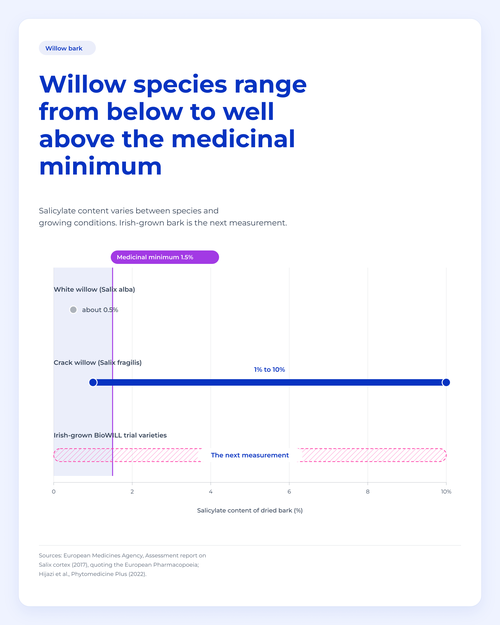
The standard is exact. The European Pharmacopoeia, as quoted in the agency's 2017 assessment, requires willow bark for medicinal use to contain at least 1.5 per cent of total salicylic derivatives, expressed as salicin and calculated on the dried material [5]. The precision extends further down the supply chain. For willow bark dry extract the pharmacopoeia sets a separate minimum of 5 per cent, and each manufacturer specifies its own permitted range for the extract in a finished product [5]. The market behind it is established. The agency's assessment records willow bark medicines authorised in Germany since 1986 and in France since 1988, with further registrations in Poland [5].
So research on willow from these trials has already found, in varieties grown on the island of Ireland and in France, the class of compounds on which a regulated European market sets its specification.
The next step is to measure how much of them there is. The 2022 study was designed to identify compounds, not to quantify them [4]. The agency notes that salicylate content varies between willow species and within a species according to growing conditions and processing [5]. Quantifying Irish-grown bark against the pharmacopoeia, across varieties, sites and seasons, is precisely the kind of well-defined, fundable task that turns a research finding into a supply proposition.
Irish companies are already climbing the pyramid
Willow is one example, and it is not the most advanced. The companies the Government chose to showcase at the launch show Irish firms moving biological resources up the value chain right now. Pure Marine Biotech in Co. Monaghan processes whole blue whiting into protein powders rich in bioactive peptides, calcium powders and omega-3 oils for human and animal nutrition. Biasol turns brewers' spent grain into snack foods, and Kerry is exploring how spent coffee grounds can become food ingredients [3].
The Minister for Climate, Darragh O'Brien, framed the ambition as rethinking "what we may currently discard or view as waste" [3]. Each of those companies is turning a resource that would otherwise earn less into a higher-value product, which is the direction the pyramid points.
Ireland's assets, side by side
What the top tier needsWhat Ireland already hasThe next stepBiological resources with known health-relevant compoundsWillow bark compounds identified in trial varieties [4]; marine resources already processed into peptide-rich nutrition ingredients [3]Quantify against the relevant pharmacopoeial or food standardQuality systems, validated analysis and regulatory know-howA medicines sector that accounted for 53.2 per cent of Irish goods exports in 2025 [2]Bring that expertise into the strategy's objective on innovation, knowledge and skills [3]Pilot-scale processingThe National Biorefinery Pilot Plant at Lisheen, Co. Tipperary, and the green biorefinery at Shinagh [3]Run pilot trials to a quality specification as well as to yieldA market that buys on specificationSingle-ingredient willow bark medicines authorised in Germany and France, with registrations in Poland [5]Put buyers' specifications in front of growers earlyPolicy that backs the move from lab to marketBioScale 2030's emphasis on reaching first commercial deployment [3]Name health-grade ingredients as a target within biomanufacturing
Europe is pushing towards higher-value use
The argument has support in Brussels. One of the main goals of the European Commission's bioeconomy strategy, adopted in November 2025, is to transform how biomass is used and valued, prioritising extended high-value applications [7]. The strategy also moves the emphasis from research towards industrial deployment and market scale-up [7].
The Dublin summit added momentum of its own. Commissioner Jessika Roswall launched the Biobased Europe Alliance there, an initiative aimed at the barriers to the commercial scale-up of biobased materials, products and technologies [8]. Policy in both Dublin and Brussels now points towards scale-up and higher-value use. For an Irish company or research group with a health-grade idea, that is the direction it needs.
Where should Ireland start?
With the steps that cost least and reveal most. The first is measurement: putting numbers on the health-relevant compounds in resources Ireland already produces, willow bark among them, against the standards buyers use. A dataset like that is modest to commission and decisive in what it shows.
The second is ambition at pilot scale. Lisheen and Shinagh exist to test technologies and connect research with enterprise [3]. Some of those tests could be run to the quality bar a health buyer applies, so that what they demonstrate is saleable at the top of the pyramid as well as the middle.
The third is early contact between growers and buyers. Health-grade supply works best when the specification is known before a crop is planted or a side-stream is redirected, so that the resource is developed for the market it will serve.
The fourth is people. Ireland's medicines workforce already does, every day, the things the top tier requires. Bringing some of that expertise into bioeconomy projects would be among the most valuable moves available. The strategy's objective on innovation, knowledge and skills already makes room for it [3].
Ireland has spent decades learning to make medicines to exacting standards for patients around the world. BioScale 2030 offers a reason to apply that discipline to what grows on Irish land and in Irish waters. For a country that already knows how to meet the most demanding specifications in the pyramid, that is a climb worth starting.
Epitheal is a pharmacist-founded skin and wound recovery company based in Co. Galway.
4. References
All links tested 23 October 2026. See audit section C for the outcome of each.
[1] Berbel, J. and Posadillo, A. (2018) 'Review and analysis of alternatives for the valorisation of agro-industrial olive oil by-products', Sustainability, 10(1), 237. doi:10.3390/su10010237. https://www.mdpi.com/2071-1050/10/1/237. Free, open access. The pyramid is the authors' adaptation of Asveld, Van Est and Stemerding (2011).
[2] Central Statistics Office (2026) Goods Exports and Imports December 2025: Key Findings. Statistical release, 17 February 2026 (preliminary). https://www.cso.ie/en/releasesandpublications/ep/p-gei/goodsexportsandimportsdecember2025/keyfindings/. Free.
[3] Department of Agriculture, Food and the Marine (2026) Taoiseach, Minister Heydon and Minister O'Brien launch Ireland's first National Bioeconomy Strategy as Dublin hosts Global Bioeconomy Summit 2026. Press release, 21 October 2026. https://www.gov.ie/en/department-of-agriculture-food-and-the-marine/press-releases/taoiseach-minister-heydon-and-minister-obrien-launch-irelands-first-national-bioeconomy-strategy-as-dublin-hosts-global-bioeconomy-summit/. Free. Add the BioScale 2030 strategy document once it is located.
[4] Hijazi, A., Pisanò, I., Leahy, J.J., Kwapinski, W., Johnston, C.R. and Prendergast, J. (2022) 'Identification of high-value bioactive constituents in Northern European willow varieties: S.X. Dasyclados, Endeavour, Cheviot, Tora, Resolution, S. Purpurea, Terranova, Endurance', Phytomedicine Plus, 2, 100342. doi:10.1016/j.phyplu.2022.100342. https://doi.org/10.1016/j.phyplu.2022.100342. Free, open access under CC BY 4.0. Confirm the spelling "Pisanò" against the publisher record.
[5] European Medicines Agency, Committee on Herbal Medicinal Products (2017) Assessment report on Salix [various species including S. purpurea L., S. daphnoides Vill., S. fragilis L.], cortex. Final. EMA/HMPC/80628/2016, 31 January 2017. https://www.ema.europa.eu/en/documents/herbal-report/final-assessment-report-salix-various-species-including-s-purpurea-l-s-daphnoides-vill-s-fragilis-l-cortex_en.pdf. Free, open PDF.
[6] Caslin, B. (2020) Willow Energy. Teagasc fact sheet Energy 19, version 1. https://teagasc.ie/wp-content/uploads/media/website/rural-economy/rural-development/diversification/Energy-19-Willow-Energy-Crop.pdf. Free, open PDF. This replaces the 2015 best-practice guidelines, whose PDF resolves but could not be read.
[7] European Commission, DG Environment (2025–26) Bioeconomy Strategy. Strategy page, https://environment.ec.europa.eu/strategy/bioeconomy-strategy_en, and press release IP/25/2819, https://ec.europa.eu/commission/presscorner/detail/en/ip_25_2819. Free.
[8] Department of Agriculture, Food and the Marine (2026) Ministers Heydon and O'Brien conclude successful Global Bioeconomy Summit 2026. Press release. https://www.gov.ie/en/department-of-agriculture-food-and-the-marine/press-releases/ministers-heydon-and-obrien-conclude-successful-global-bioeconomy-summit-2026/. Free. Seen in search results but not opened; open it in the source check.
[9] RTÉ News (2026) 'Exports hit record level of €260.3 billion in 2025 – CSO', 17 February 2026. https://rte.ie/news/business/2026/0217/1558929-cso-export-and-import-figures/. Free. Cited only for the trade commentator's attribution of the 2025 rise to tariff frontloading.